
Building Confidence Through Communication
Did you know that a child's vocabulary and communication skills are among the strongest predictors of future academic success?
Language shapes how children make sense of the world around them. It influences how they build relationships, solve problems, express emotions and develop confidence in themselves and others. For this reason, communication and language sit at the heart of everything we do.
From the moment children enter our EYFS, they are immersed in an environment rich in conversation, storytelling, singing, questioning and discussion. We know that young children are naturally curious, and that meaningful talk helps them organise their thinking, deepen their understanding and make connections between new experiences and prior knowledge. Research from the Education Endowment Foundation consistently highlights the importance of high-quality interactions and oral language development in supporting future learning and wellbeing.
Children are encouraged to speak in full sentences, explain their thinking, ask thoughtful questions and engage in meaningful discussion with adults and peers alike. Adults model ambitious vocabulary, extending children's language through purposeful interactions and creating countless opportunities for rich conversation throughout the day. Whether discussing a favourite story, explaining how a model was constructed, reflecting on an experience in Forest School or wondering aloud about something they have noticed, children quickly learn that their ideas matter and that their voice has value.
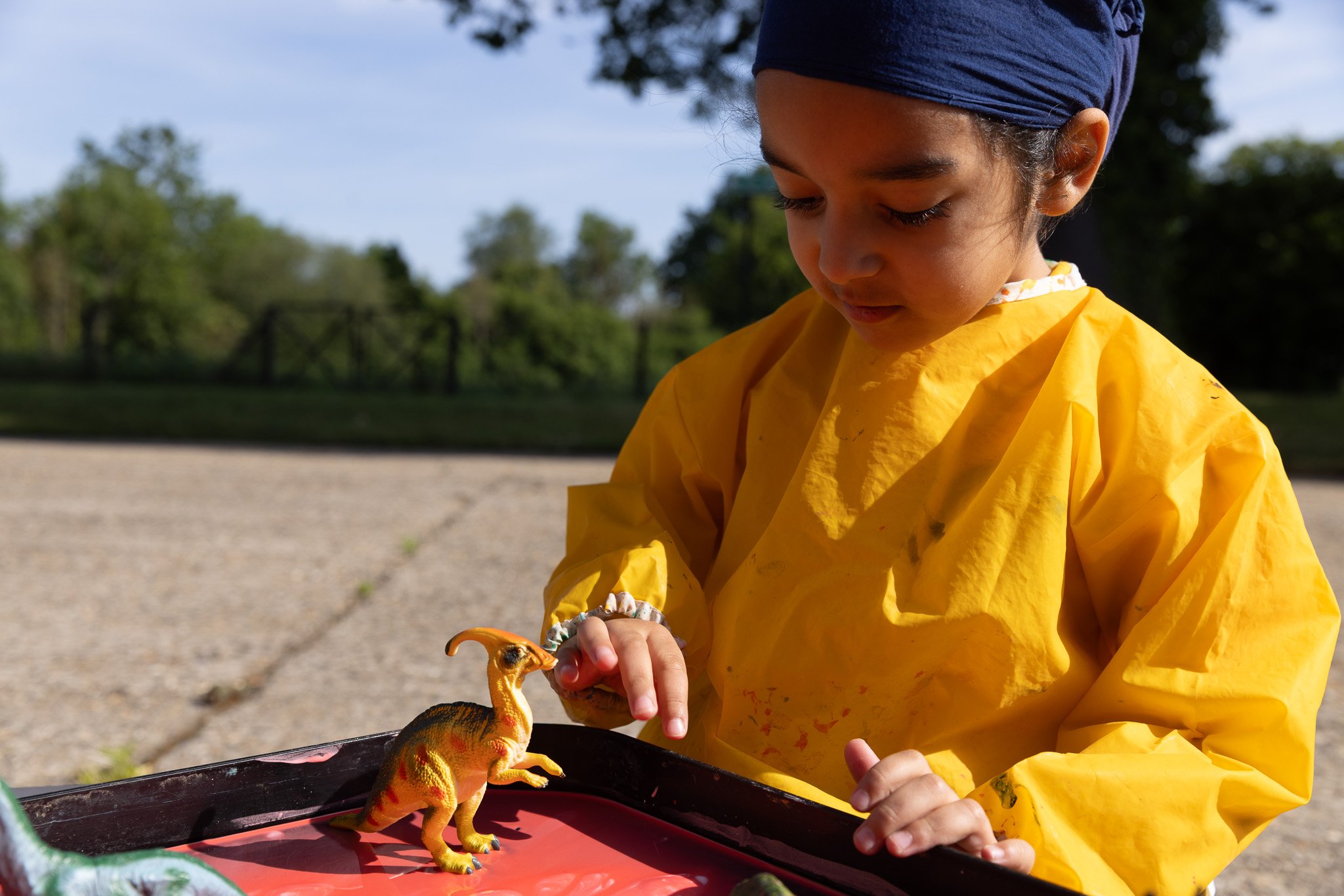
Stories, songs and rhymes form an important part of daily life, not only because they bring joy and wonder, but because they help children develop listening skills, imagination and an ever-expanding vocabulary. We want children to become confident communicators who can listen attentively, articulate their thoughts clearly and contribute positively to the world around them.
Punjabi and English sit naturally alongside one another throughout school life, enriching children's experiences and helping them develop confidence in both languages whilst strengthening their sense of identity and belonging. Through stories, songs, conversation and everyday routines, children come to appreciate the richness and beauty of language, recognising that communication is not only a tool for learning but also a way of expressing identity, nurturing relationships and developing a deeper understanding of the world around them.
Above all, we want children to experience the joy of being heard. In a world that often moves quickly, we believe there is something deeply powerful about taking the time to listen carefully to young children, to wonder alongside them and to help them find the words that allow them to express their ideas, feelings and dreams with growing confidence and clarity.