
Computing
How does the internet actually work, and how can we use technology without letting it do our thinking for us?
Computing at Sikh Heritage Girls School is about understanding the digital world as well as learning to participate in it confidently.
Pupils explore how computers and networks work, how instructions become programs, how data can be organised and represented, and how digital technology can be used to create, communicate and solve problems. As their knowledge develops, they also become more critical users of technology, considering how information can be checked, how personal data and systems are protected, and what emerging technologies such as artificial intelligence can and cannot reliably do.
Our curriculum is designed by SHGS and informed by the Teach Computing Curriculum, adapted carefully for our mixed-age classes and wider curriculum. It develops computer science, information technology and digital literacy together so that pupils become increasingly capable not only of using technology, but of understanding the principles behind it.
Intent
We want girls to leave primary school with a secure foundation in computer science and the practical confidence to apply that knowledge independently.
Programming develops alongside an understanding of computing systems, networks, data and digital information. Pupils learn to create purposeful digital content, select suitable tools, protect their information and judge the reliability of what they encounter online. They also begin to understand emerging technologies, including artificial intelligence, so that novelty is never mistaken for reliability or educational value.
Computational thinking runs throughout the curriculum. Girls learn to break problems into smaller parts, identify patterns, use logical reasoning and create precise solutions. These habits are valuable when programming, but they also help pupils approach unfamiliar problems with greater structure and independence.
Implementation
Foundations in EYFS
In Reception, the foundations of Computing are developed through purposeful experiences rather than formal laptop lessons. Children notice technology in everyday life, explore cause and effect, follow and give simple instructions and learn to put actions or events into a logical sequence.
Simple digital tools may be used where they add something worthwhile to the learning. Alongside this, children begin to develop safe habits by understanding that some information is private, permission matters when using technology, and a trusted adult can help if something on a device causes concern.
These experiences provide a natural foundation for the more explicit study of algorithms, programming, digital systems and online safety that begins from Year 1.
Programming and computational thinking
Programming becomes progressively more demanding as pupils move through the school. Younger girls learn that an algorithm is a set of precise instructions and discover through practical tasks why order and clarity matter. They create simple programs, predict what will happen and learn to debug when an outcome is not what they expected.
Later work introduces sequence, repetition, selection, variables, inputs and outputs. Pupils begin to decompose larger problems into manageable parts and use logical reasoning to explain why a program behaves in a particular way.
By the upper years, girls are expected to plan before programming, test systematically and make increasingly independent decisions when something does not work. The emphasis is on understanding rather than simply producing an impressive outcome on screen.
Systems, networks and cyber security
Understanding what happens behind the screen is an important part of the curriculum. Early work introduces pupils to different forms of technology and their purposes before moving into computer systems, networks, the internet and the way information can travel between devices.
In Years 5 and 6, this develops into more demanding work on networks and cyber security. Pupils consider how the internet enables communication and collaboration while also learning why accounts, devices and information need protection.
Password security, privacy, personal data, phishing, scams and online identity are taught in age-appropriate ways. Girls learn that attempts to obtain information can be convincing and that secure behaviour depends on understanding risks rather than simply remembering a list of rules. They also learn how to report concerns and what to do if information or an account may have been compromised.
Online safety develops alongside this technical knowledge. Pupils consider the reliability of digital information, recognise inappropriate content or contact and learn to question what they encounter rather than assuming that something is trustworthy because it appears professional.
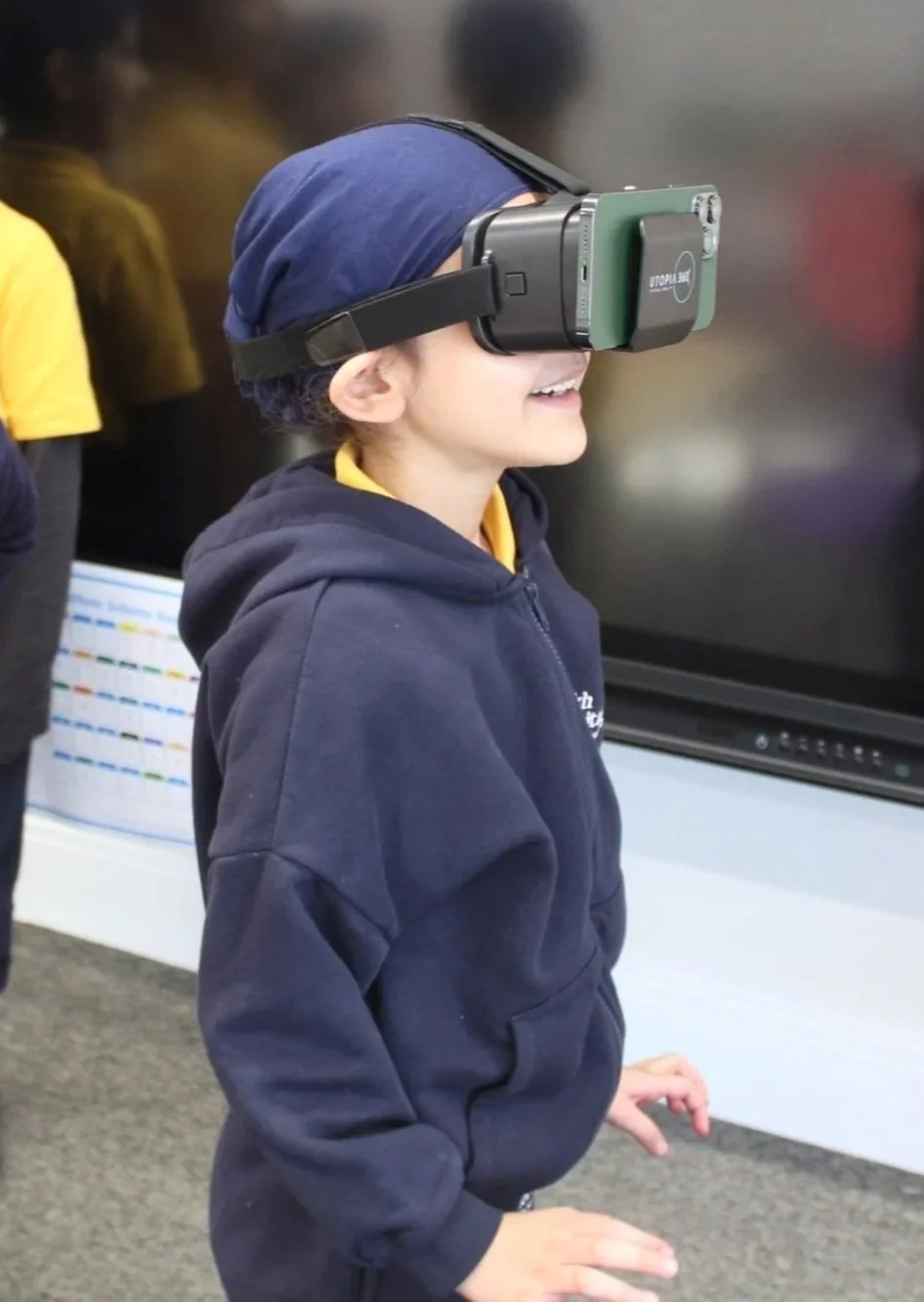

Data, information and digital creation
Technology is also used as a means of creating, organising and communicating. Across the primary years, pupils work with different forms of digital content, which may include writing, images, photography, animation, audio, presentations, video and data visualisation.
Girls are taught to consider audience and purpose when choosing a digital tool. Learning which button to press is useful only if pupils also understand why a particular application or form of media suits the task.
Work with data begins with grouping and representing simple information and develops towards tables, charts, databases and other digital representations. Pupils learn how information can be organised, searched, compared and interpreted, with increasing attention to the quality and usefulness of what the data shows.
Microsoft 365 and other school-approved platforms and educational tools are used where they support this learning. Practical fluency develops through regular experience of creating, organising, saving, retrieving and presenting work independently.
Artificial intelligence and emerging technology
As pupils become old enough to encounter artificial intelligence meaningfully, they begin to explore how generative AI works at an appropriate level and why its outputs require human judgement.
Girls learn that AI can produce information that sounds convincing while being inaccurate, biased, outdated or invented. They therefore learn to verify important claims against reliable sources and understand that a fluent answer is not evidence that a system understands a subject.
Privacy and responsible use are taught alongside this. Personal, confidential or sensitive information must not be entered into AI tools, and pupils use only school-approved technologies where AI forms part of learning.
The curriculum also asks pupils to consider when AI is genuinely useful. Technology may support particular authorised tasks, but it should not remove the thinking, remembering, writing, reasoning or creating that pupils need to learn to do for themselves.
Technology with purpose and equitable access
Every girl has individual access to a laptop during Computing lessons. This allows pupils to gain repeated practical experience, work independently and demonstrate what they themselves can do rather than waiting to share a device. It also ensures that progress in Computing does not depend on the technology available at home.
Across the wider curriculum, however, devices are used selectively. A laptop is not automatically preferable to handwriting, a physical book, discussion, drawing, practical work or sustained thought. Part of becoming digitally competent is learning to recognise when technology adds value and when another approach is better.
Pupils arrive with very different levels of previous digital experience, and confident use of a touchscreen or familiar application is not mistaken for secure computing knowledge. Explicit teaching gives every girl access to the underlying concepts.
Where pupils with SEND need additional support, teachers may adapt interfaces, instructions, recording or the amount of scaffolding provided while retaining the same important computing ideas. As pupils progress, this support is reduced where appropriate so that independence continues to grow.
Assessment
Assessment in Computing considers what pupils understand as well as what they can produce.
Teachers look at whether pupils can explain an algorithm, predict the behaviour of a program, locate and correct an error, describe aspects of a network, interpret data or justify the choice of one digital tool over another. Practical outcomes remain important, but following a sequence of instructions successfully is not the same as understanding why those instructions work.
Assessment therefore helps teachers distinguish genuine computing knowledge from familiarity with a particular device or application and identify what needs to be strengthened next.
Impact
By the time girls leave SHGS, we want them to see technology as something they can understand, create with and question, rather than something that simply happens around them.
They should have secure foundations in computer science, including programming, computational thinking, systems and networks, alongside the practical ability to create and manage digital information effectively. They should know how to protect personal information, recognise common cyber risks and approach online content with appropriate scepticism.
When new technologies emerge, pupils should have enough knowledge and judgement to consider what the technology does, what information it may rely on, whether its output can be trusted and whether using it genuinely improves the task at hand.
A strong Computing education should leave girls confident with technology without making them dependent upon it. We want them to approach the digital world with curiosity, competence and the independence to decide when technology deserves a place in their thinking.
Research-Informed Practice
Our curriculum reflects the National Curriculum's interconnected aims for Computing: understanding the principles of computer science, applying information technology effectively and becoming responsible, competent and creative users of digital technology.
The Teach Computing Curriculum, developed through the National Centre for Computing Education, informs our sequencing across programming, computing systems and networks, data and information, and digital media. SHGS adapts this work to our mixed-age classes and curriculum priorities.
Current Department for Education guidance also informs our teaching of online safety, cyber security and artificial intelligence, particularly around personal data, phishing, scams, misinformation, bias and the need to check AI-generated content carefully.
Selected References
Department for Education. National Curriculum in England: Computing Programmes of Study.
National Centre for Computing Education / Teach Computing. Teach Computing Curriculum.
Department for Education. Teaching Online Safety in Schools.
Department for Education. Generative Artificial Intelligence in Education.
Department for Education. Guidance on generative AI and data protection in schools.